From Classroom to Care: What to Expect in Your CNA Training Journey
The road to achieving the role of a Certified Nursing Assistant (CNA) begins with a deliberate mix of theoretical knowledge and practical application. Learners will examine key subject areas, from human anatomy to techniques in patient care. This fundamental training prepares students for hands-on experiences that build vital competencies. Nevertheless, the transition from classroom concepts to hands-on healthcare environments presents distinct challenges and possibilities. Grasping these nuances is crucial for those exploring this career. What lessons lie ahead as the process develops?
Understanding the Role of a Certified Nursing Assistant
CNAs additionally play a critical part in upholding a clean and safe environment, which is essential to patient healing and recovery. They commonly extend compassionate emotional support, enabling patients to manage their health-related challenges. This position demands compassion and strong communication skills, as CNAs interact closely with patients and their families. Fundamentally, the CNA's contributions are essential in promoting quality care and improving the overall experience for patients in various healthcare settings.
Fundamental Skills for Effective CNA Practice
Developing essential skills is crucial for proficient CNA work. Certified Nursing Assistants need to cultivate a range of capabilities to offer superior patient care. Among these, communication stands out as key; CNAs are required to communicate information effectively to both patients and healthcare teams. Furthermore, competence in fundamental medical tasks, such as monitoring vital signs and supporting daily routines, forms the foundation of their responsibilities.
Time management skills are equally important, enabling CNAs to prioritize tasks efficiently in typically high-speed healthcare environments. Demonstrating empathy and compassion strengthens bonds with patients, contributing positively to their overall quality of care. Moreover, proper infection control protocols are critical to ensuring a secure medical setting. Lastly, strong critical thinking supports the early detection of changes in patient conditions, allowing for timely intervention. By honing these skills, CNAs can greatly contribute to patient care and support the healthcare team's objectives.
What to Expect from Your CNA Classroom Experience
The instructional program for aspiring Certified Nursing Assistants is designed to equip them with the foundational competencies necessary for effective practice. Learners will experience a structured curriculum that covers essential topics such as anatomy, patient care methods, and communication skills. Multimedia presentations, lectures, and discussions are frequently used instructional methods, promoting a dynamic educational experience.
Facilitators, often experienced healthcare professionals, deliver important knowledge and hands-on examples. Evaluations through quizzes and examinations are employed to measure comprehension and retention of content. Moreover, students may participate in group projects and case studies, enhancing collaborative skills and critical thinking.
The classroom atmosphere fosters interaction, permitting students to raise questions and better understand key concepts. This encouraging environment is essential for developing confidence prior to transitioning to hands-on training. In the end, the classroom experience establishes the foundation for a thriving career as a CNA, highlighting the significance of both expertise and empathy in patient care.
What Practical Training Involves for CNAs
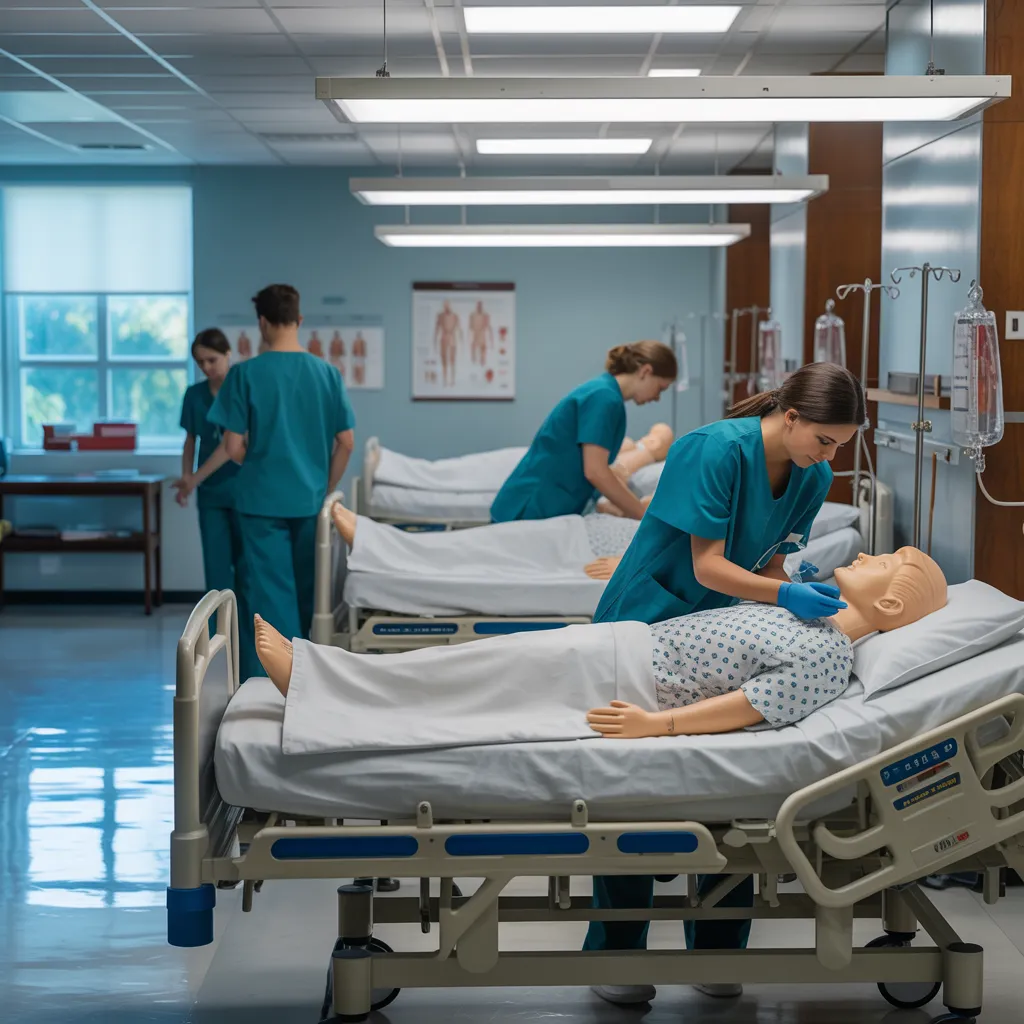
Practical training for future Certified Nursing Assistants allows students to apply their classroom knowledge in real-world settings. This phase generally occurs in healthcare environments, where students work under the supervision of seasoned professionals. Participants acquire fundamental abilities like patient hygiene, mobility assistance, and basic medical procedures.
In these sessions, students interact directly with patients, developing valuable experience in communication and empathy. They conduct essential sign measurement, observe patient care routines, and develop familiarity with the healthcare environment.
Hands-on training also emphasizes collaboration and group effort, as students frequently collaborate with fellow medical practitioners. This approach not only strengthens their technical abilities but also cultivates a deeper understanding of the multidisciplinary dimensions of healthcare delivery.
At its core, this applied training is significant in preparing future CNAs for the difficulties and obligations they will encounter in their professional lives, offering them a strong foundation for their career journey.
Steps to Earning Your CNA Certification
After completing practical training, CNA candidates must navigate the certification procedure to formally begin their career. This credentialing journey usually involves signing up for a state-approved certification exam, which often includes both theoretical and skills-based elements. Applicants are encouraged to carefully examine the exam requirements specific to their state, as rules and standards are subject to change across different states.
In preparation, a large number of people decide to utilize study guides or take practice tests that mirror the content of the exam. Following the successful completion of the exam, applicants usually receive a certification that allows them to work as a CNA.
Aside from successfully completing the exam, a number of states may mandate background checks or additional training certifications. After becoming certified, CNAs must also stay informed about ongoing education requirements in order to keep their certification active. This process is vital for guaranteeing that prospective CNAs possess the necessary skills and knowledge to provide quality care in various healthcare settings.
Career Options for CNAs
Considering different professional avenues, CNAs (CNAs) can explore roles in a wide range of healthcare environments, including home health agencies, hospitals, and nursing homes. In hospitals, CNAs often assist nursing staff with patient care, essential sign monitoring, and daily activities, gaining invaluable experience in dynamic work settings. Long-term care facilities provide CNAs with the ability to foster strong bonds with individuals in their care, focusing on comprehensive care and personal well-being.
Home health agencies allow CNAs to function independently, visiting patients in their homes, which promotes independence and individualized attention. Additionally, some CNAs may choose to specialize in areas such as similar resource geriatrics or pediatrics, enhancing their skills and marketability.
As they gain experience , CNAs can advance to roles such as nursing supervisors or seek additional training to qualify as licensed practical nurses (LPNs) or registered nurses (RNs) . Every route provides distinct chances for professional development and personal satisfaction in the healthcare field .
Common Questions and Answers
What Is the Typical Salary for a CNA?
The average salary for a Certified Nursing Assistant (CNA) typically ranges in the range of $25,000 to $35,000 each year, depending on factors such as experience, geographic location, and the particular healthcare setting where they work.
Do Age Restrictions Apply to CNA Training?
The age requirements for CNA training programs commonly mandate that applicants be no younger than 18 years old. Certain programs are willing to consider applicants as young as 16 years of age, as long as they satisfy particular requirements, including parental consent and compliance with state regulations.
Is It Possible to Work Part-Time During Training?
Indeed, people can work part-time while completing CNA training. Juggling employment and coursework may provide financial support, but careful time management is essential to guarantee a positive outcome in the training program and hands-on experience.
What if I Fail the Certification Exam?
Should someone fail the certification exam, they can retake it after a designated waiting period. Numerous candidates discover that further study and practice enhance their chances, cultivating resilience and a greater comprehension of the material.
Are There Online CNA Training Options Available?
Yes, various online CNA training programs exist, providing learners with flexible scheduling. These programs typically merge virtual classes with hands-on clinical experience, allowing students to complete theoretical components remotely while meeting required hands-on obligations at specified sites.